Yes — load it
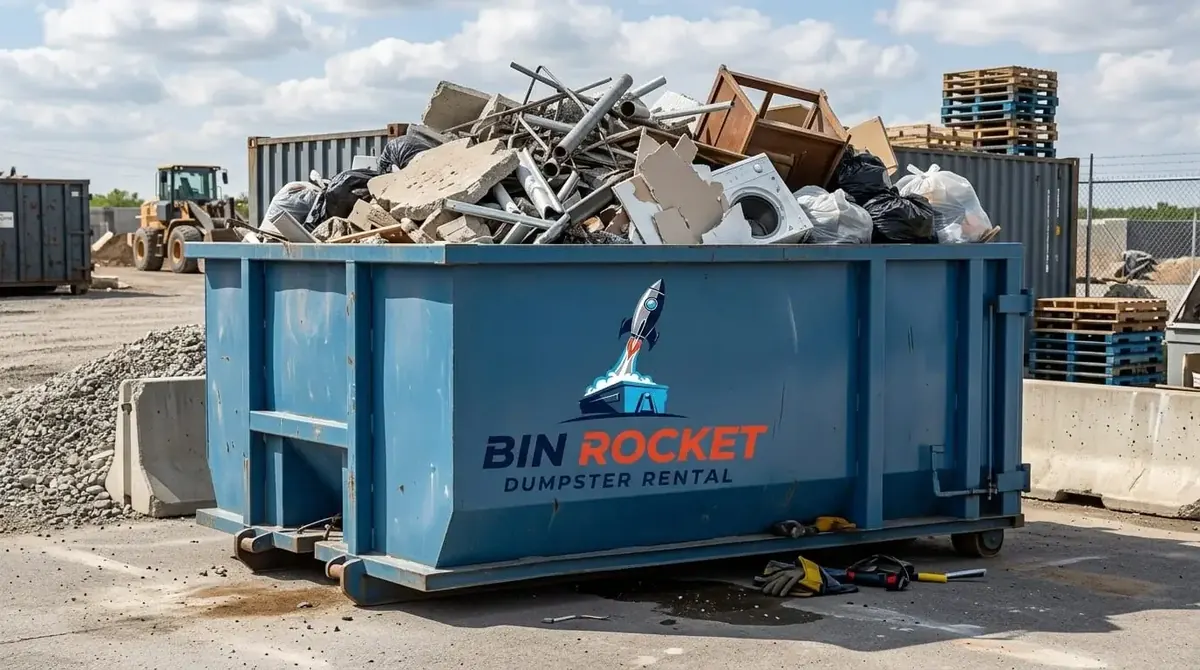
- Household junk and furniture: sofas, tables, boxes, general debris.
- Construction and renovation debris: wood, drywall, tile, flooring and cabinets.
- Roofing: shingles, tar paper and underlayment — heavy, so mind the weight allowance.
- Yard waste: clippings, branches, brush, tree trimmings and landscaping debris.
- Concrete, brick and dirt — in a 10 or 15 yard of their own, loaded level.
- Small appliances without refrigerant.
What Mississippi rules keep out
Mississippi law and MDEQ's solid waste rules name the items that cannot go to an ordinary disposal site. These are the reasons behind the no list:
Two kinds of disposal site
Mississippi splits debris in two. A Class I rubbish site takes construction and demolition debris, brick, concrete, stone and asphalt, cardboard, vegetation including stumps, furniture, appliances other than fridges and A/C units with the motor removed, and sawdust and chips. A Class II rubbish site takes only vegetation and brick, concrete, stone and asphalt. Household garbage, food waste and mixed junk have to go to a permitted municipal solid waste landfill. That is why a clean load of concrete or a clean load of limbs can cost less to dispose of than a mixed one — and why we ask what is going in.
What the local sites refuse
The City of Jackson's code (§106-153) bars ground glass, explosive or flammable liquids, oil, sewage, animal waste, vehicle bodies, spring steel or wire longer than 4 feet, and hazardous waste unless approved. Canton's code (§14-54) bars ground glass, explosives and flammables, oils other than household, sewage, carcasses, vehicle bodies, wire strands over 4 feet and hazardous waste; its landfill page now lists tires as accepted. The Pearl City Compactor takes no tires, fuel containers, flammable liquids, limbs, paint or computers, and the Richland city dump no tires, fuel containers, flammable liquids, limbs or paint.
No — and where it goes instead
The asbestos rule in Mississippi
MDEQ's Asbestos and Lead Branch wants 10 working days' notice before any regulated demolition, even where no asbestos is found, and before renovation that disturbs at least 160 square feet, 260 linear feet or 35 cubic feet of regulated asbestos material. The building has to be thoroughly inspected first by MDEQ-certified inspectors, and abatement done by MDEQ-certified people. Individual homes, including buildings with four or fewer dwelling units, are generally exempt — but not when the home is one of several small buildings coming down in a development project, or sits on a site with non-residential buildings. Burning a house with asbestos in it is prohibited. Asbestos waste goes only to a landfill approved or permitted to receive it. It never goes in a roll-off.
Heavy loads, and the loads that need a word first
Concrete, brick, dirt and tile are fine — in a 10 or 15 yard of their own, loaded level, because they fill the weight allowance long before the box looks full. Limbs and brush are fine too; if a tree service did the cutting, Madison, Ridgeland, Canton, Gluckstadt, Brandon, Richland and Florence all say the debris is the contractor's or homeowner's to haul, not the city's. A Canton load goes to the Canton landfill by city law. If you are not sure about something, call before you load it; it is far cheaper than finding out at the gate.